A daily national news show for kids, built by a small crew who were mostly under thirty.
The scale is the part that still amazes. Wonder World went to air five afternoons a week, all over the country, for the best part of a decade. It was real journalism for children, shot on film, with reporters sent across Australia and halfway around the world. And it was made by a tiny crew, most of them young, on a budget a modern network would laugh at. This is how they pulled it off.
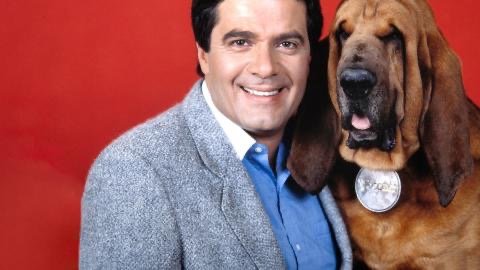
Simon Townsend and Woodrow on Wonder World.
One feature film a week
The numbers are the easy part to admire. Over its run from 1979 to 1987, Wonder World employed seventeen reporters and produced something like eight thousand stories across nearly two thousand episodes. By August 1982 it had already made 785 episodes and was seen daily by more than a million viewers. Every week the team turned out about eighty minutes of finished screen time. That is roughly one average feature film, every single week, shot on 16mm reversal film.
The crew that did it was small. For most of the run that meant an executive producer, an associate producer, a production assistant, two researchers, two camera operators, two sound recordists, four reporters and four editors. Nothing was scripted. Each story leaned on the researcher's notes, the producer's briefing, and the wit of the reporter and the two-person crew sent out to get it. If that sounds like a lot of trust to put in young people, it was. That was the whole idea.
Timeless and placeless
Townsend had a rule about what made a Wonder World story. It had to travel. He wanted every story to feel, as he put it, timeless and placeless, so a child watching in Perth cared about it as much as a child in Sydney. He even had a name for that viewer, Tom in Perth. If a story would not play for Tom, it did not go to air.
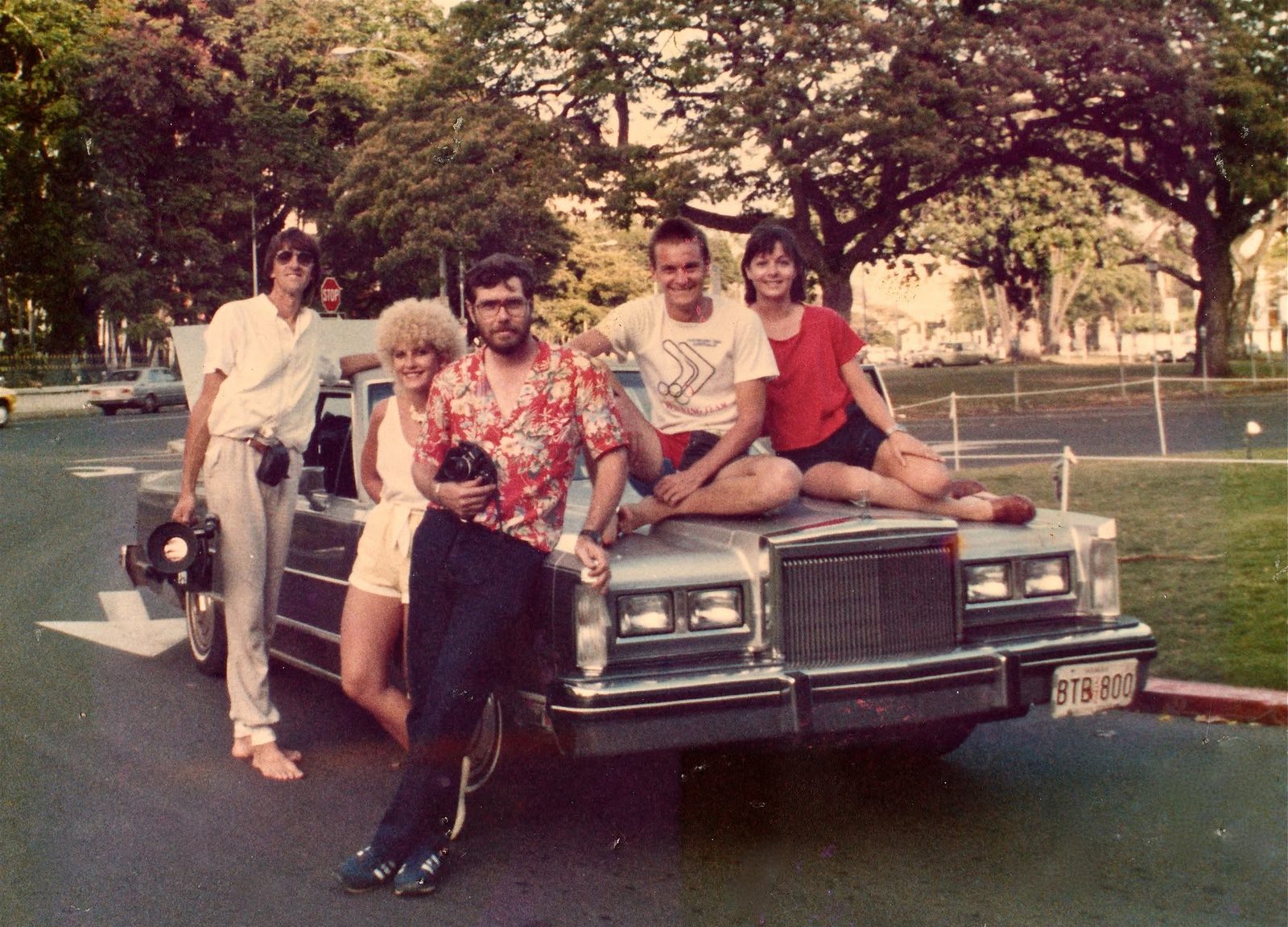
That rule sent the crew a long way from home. They filmed all over Australia and then kept going, to America, the United Kingdom, Europe, India, Asia, New Zealand, Fiji and the Philippines. "We travelled a lot, across the whole of Australia and internationally," Townsend told TV Tonight. "We went to Hawaii, India, Bali, Hong Kong and other countries." Not bad for an afternoon children's show.
A Wonder World crew on an overseas shoot. The show sent its reporters and two-person crews across Australia and around the world, from Hawaii to India.
The co-host
Woodrow, the dog who got fan mail
Every episode opened with Townsend at the desk and a large, droopy bloodhound beside him. Woodrow was not a prop, he was the family pet, and he got the job by accident. "Angela Catterns did a story on bloodhounds and the final shot was one little puppy," Townsend remembered. "I said, can you find out if that puppy has been sold?" It had not. Woodrow was in.
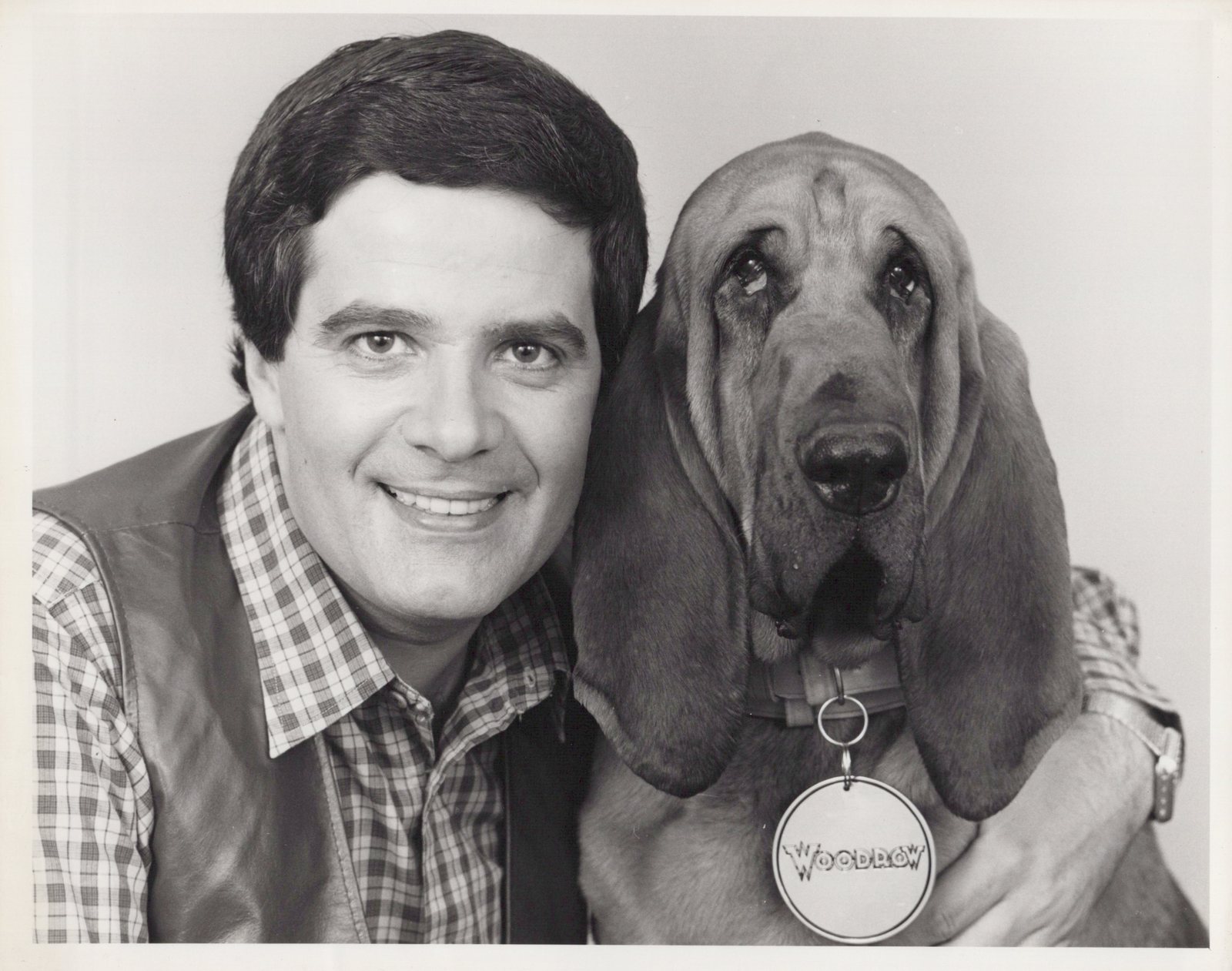
He came with maintenance. "He dripped a lot of saliva and I always had to have a towel," Townsend said. "But he was a darling dog, both my family pet and programme mascot." Woodrow died in 1986. He was replaced first by a sulphur-crested cockatoo, then by a Labrador puppy, and because Townsend had just won a Logie, the viewers got to name the pup and called him Logie.
Simon Townsend and Woodrow, 1981. The bloodhound wore his own engraved medallion and pulled up to four hundred letters a day from children around the country.
The theme song they had to replace
The first theme song nearly got away from them. Wonder World originally opened to "Afternoon Delight" by the Starland Vocal Band, until Townsend actually listened to the lyrics and worked out what the song was really about. For a children's show, it had to go.
He commissioned a replacement, "Welcome to my Wonder World", originally recorded by John St. Peeters. It did better than a theme song needed to. It was released as a single, cracked the Top 40, and was performed on Countdown. A generation can still sing it back, word for word.
Where it came from
The show almost did not happen. Townsend had been a newspaper reporter and then a reporter on A Current Affair, which he joined after meeting its host Mike Willesee at a dinner party. He also had a stake in a children's newspaper called Zoot. Put those two things together and you get the idea for a fast, smart, magazine-style news show for children.
Getting it to air was the hard part. "Nine paid for a pilot, Seven paid for a pilot but no-one took it up," he told TV Tonight. Then the rules changed. In 1979 the Australian Broadcasting Tribunal brought in a compulsory C classification, which forced the networks to screen proper children's programming in the afternoon. All of a sudden Townsend had something every network needed, and Ten said yes.
It started small, in Sydney, in September 1979. Then Harvey Shore came on as producer in early 1980 and put his publicity background to work, and the ratings climbed until the show was screening in every television market in the country. Townsend kept pushing for more: in 1981 his company put a submission to the broadcasting tribunal to set up a dedicated 16-hour-a-day children's television channel. The engine room mattered as much as the front desk. You can read more about Harvey on his profile.
The music nobody else was playing
Every episode had a music segment, and the show often made the clips itself. That is how Wonder World came to make the first ever music video for a young Sydney band called INXS, well before the rest of the world caught on. For anyone who grew up on the show, the music is half of what they remember. Townsend always said the hallmark of a Wonder World story was humour and popular music, and that the two were how the whole thing came together.
Wonder World in print
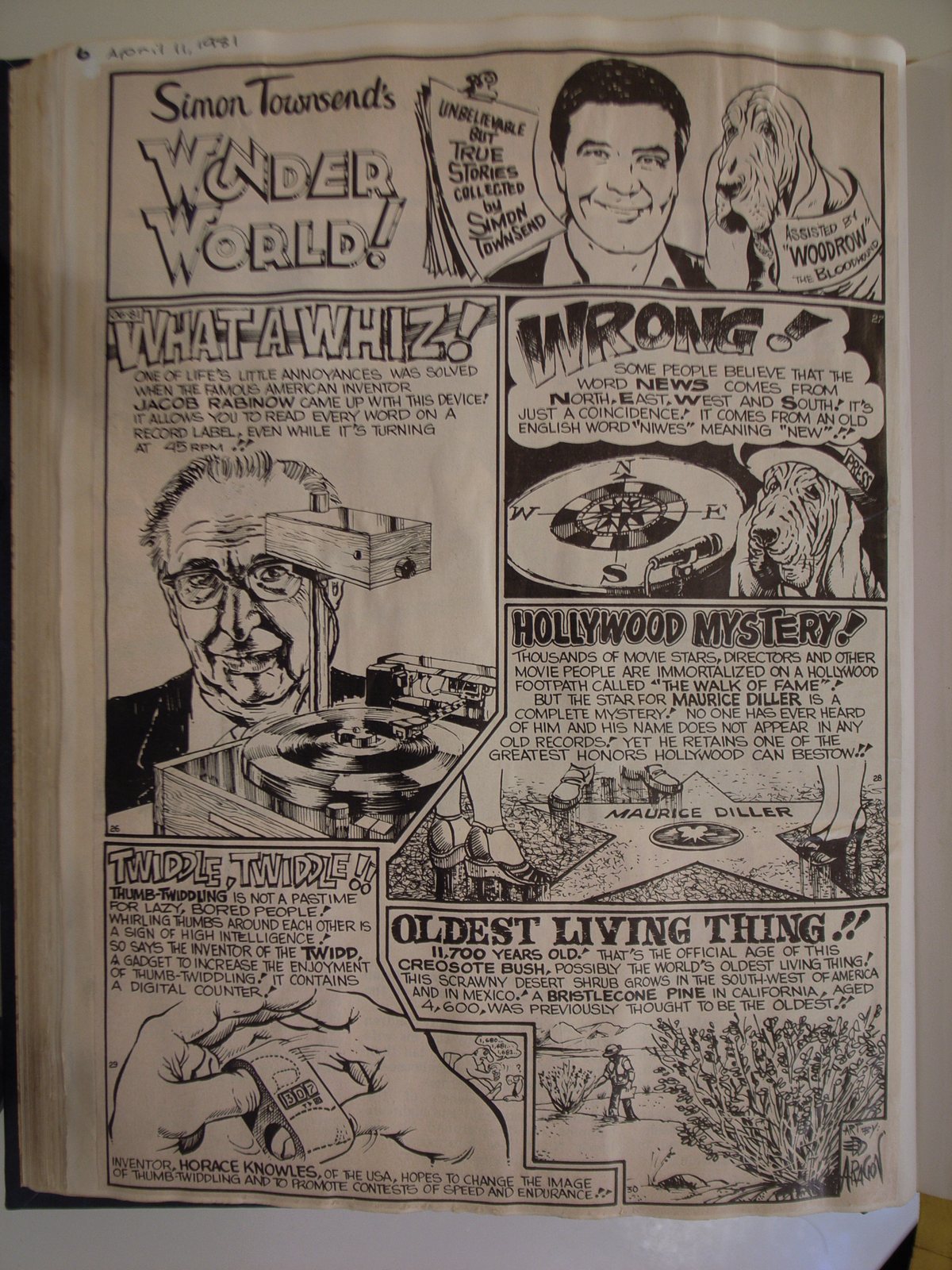
The show was big enough to jump off the screen and onto the page. A newspaper comic strip, "Simon Townsend's Wonder World!", ran in 1981, drawn by the artist Aragon and built from the same unbelievable-but-true material as the program: the world's oldest living thing, a mystery name on the Hollywood Walk of Fame, walking cities of the future. Woodrow got a panel of his own, badged "the Bloodhound".
A page of the Simon Townsend's Wonder World! newspaper comic strip from 1981, drawn by Aragon. It carried the same "unbelievable but true" stories as the show, "collected by Simon Townsend, assisted by Woodrow the Bloodhound".
The Prime Minister turned up for the 1000th show
By 1983 the show had made one thousand episodes, which for a daily program is its own kind of marathon. The Prime Minister, Bob Hawke, presented Townsend with a special award to mark it and congratulated him on what the show had done for Australian children.
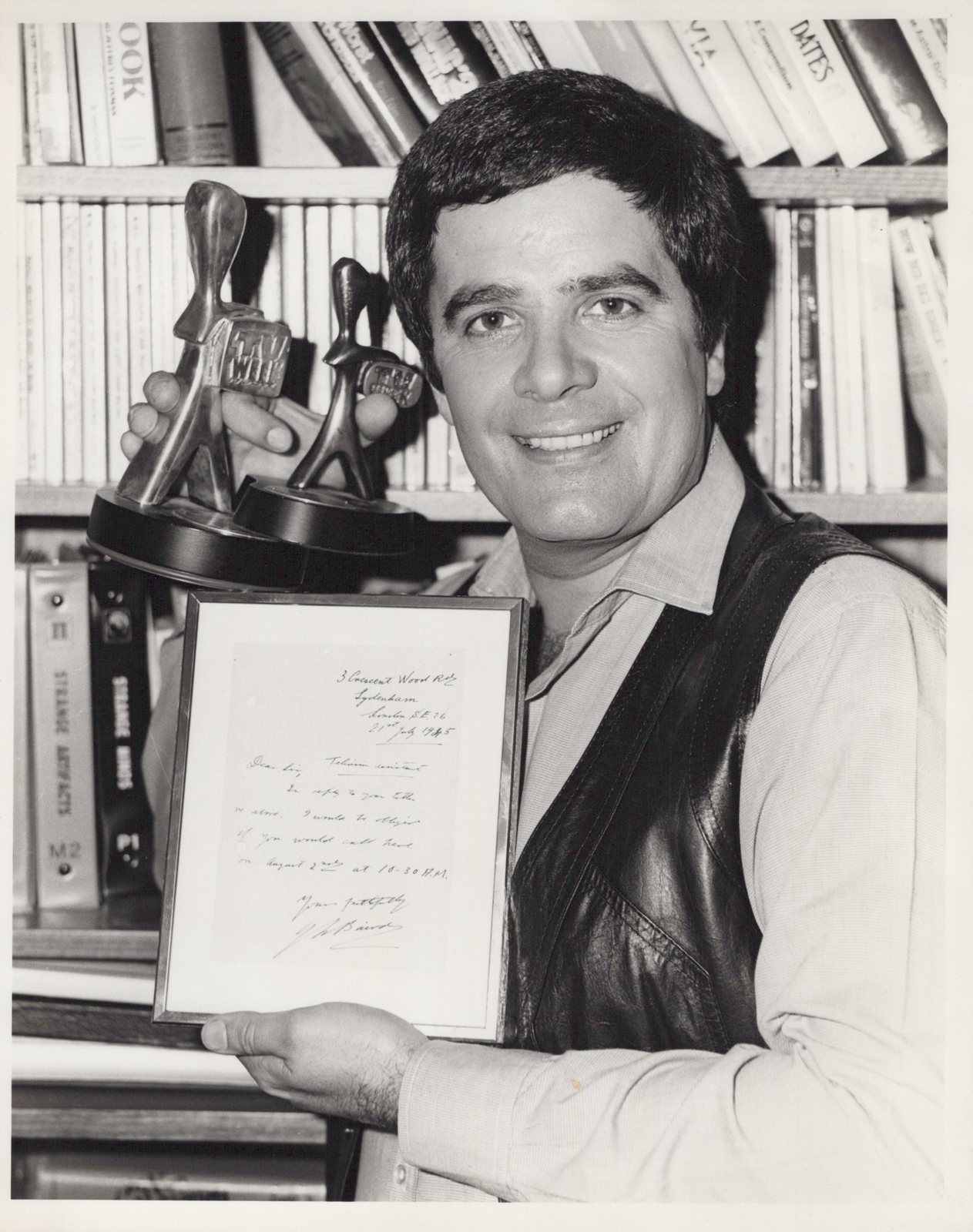
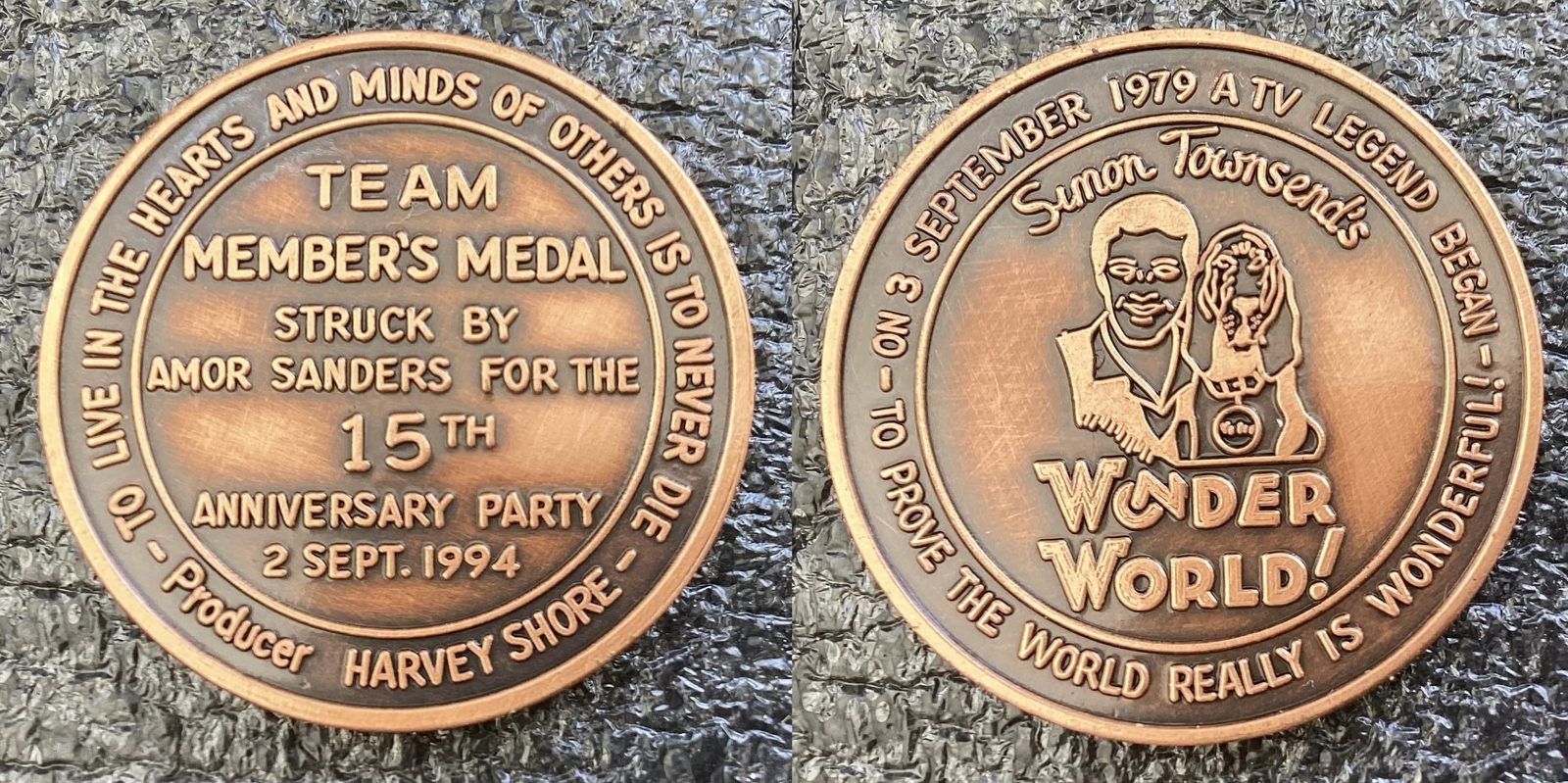
Townsend with two of the show's Logies in 1981, beside a framed 1925 letter handwritten by John Logie Baird, the inventor of television the Logie Award is named after.The team member's medallion, struck for the show's 15th anniversary in 1994. One face reads "to live in the hearts and minds of others is to never die"; the other marks the date a TV legend began, 3 September 1979.
Putting it back together
Where you can watch it now
Most of this nearly disappeared. A lot of what survives does so because Townsend's family recorded the show off the television at home onto Betamax tapes, ads, news bulletins and all. His son Michael has been working through those, restoring the episodes and putting them back where people can watch them. They live on the show's YouTube channel now, with more added as the restoration continues. For anyone who worked on the show, or who simply grew up on it, that channel is the closest thing to it being back on after school.